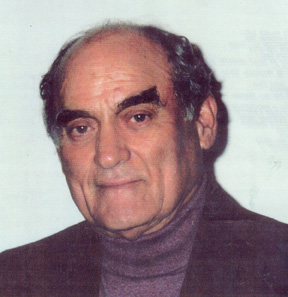
Read by Palmer Short on April 10, 2005
BORN AGAIN UNITARIAN UNIVERSALISM
by Forrest Church
Delivered at General Assembly
in Boston, Massachusetts
June 29, 2003
Being in Boston for this
year’s Unitarian Universalist General Assembly is a great privilege for all of
us here assembled. I can’t help but think that it may spark new energy for and
commitment to our chosen faith. This afternoon, as my own contribution to this
noble collective task, I shall dedicate my remarks to our good news. That’s
what the word, gospel, means, by the way: good news. I, for one, am not ashamed
of the liberal gospel. It has enriched, even transformed my life. For this, I
entail an obligation, to preach and publish our good news as persuasively as I
can and to invite others to join me in its celebration.
As the negative print
image of every form of fundamentalism, Unitarian Universalism offers to the
world an alternative religious vision. Rather than rend, we sew. Rather than
spend our lives dividing sheep from goats, we celebrate unity, twice in our very
name. As for liberal, it means generous, flexible and free. And yet, this saving
power, the power of our good news, will make an impact only if we bring the same
passion to our liberal faith–to our open handed, open hearted, open minded
faith–that others bring to theirs.
form of fundamentalism,
Unitarian Universalism offers to the world an alternative religious vision.
Rather than rend, we sew. Rather than spend our lives dividing sheep from goats,
we celebrate unity, twice in our very name. As for liberal, it means generous,
flexible and free. And yet, this saving power, the power of our good news, will
make an impact only if we bring the same passion to our liberal faith–to our
open handed, open hearted, open minded faith–that others bring to theirs.
You may know William
Butler Yeat’s poem, "The Second Coming." I have turned to it often
over the past few disheartening months. Observing an earlier war-wracked
landscape, he said, "The best lack all conviction, while the worst are
filled with passionate intensity." Do you know what separates the worst
from the best? The worst are sure that they’re the best, while the best have
the good sense to acknowledge that they carry the worst within them. This may
(and should) temper the passion of our intensity, but it must not undermine our
conviction. In fact, never in history has the world so needed the witness of a
faith that respects rather than disdains honest differences of belief. To take
our light out from behind the bushel, however–to make it shine more brightly
in order to penetrate the gathering darkness–we must first articulate more
precisely, for ourselves and then to others, what this light of ours
illuminates.
Let me pose a question. If somebody asked you, "What do you believe?" would you have a ready answer? Every year at All Souls Church in New York City, the congregation I have served for the past quarter century, our ninth graders prepare three-minute credo statements and deliver them to the congregation on Coming of Age Sunday. Afterwards at coffee hour, I often hear parents and others in the congregation musing about whether they could do the same.
Well, could you?
Imagine yourself at a dinner party, the only person there who goes to church. When this telling bit of information inadvertently leaks out, you pique the curiosity of your companions–all of whom graduated from organized religion years ago. They want to know why. They want to know more. All of a sudden the dinner party is in jeopardy. Feeling more defensive than evangelical, you start pushing spin control buttons. "Well, not really church. You see, I’m a Unitarian Universalist."
"I’ve always wondered about Unitarian Universalism. What do you actually believe?" the woman across from you asks.
"Actually, nothing," you sputter. "Well, not really nothing, more like anything." You then rush to assure them that you don’t believe that Jesus was born of a virgin or resurrected on the third day, you almost never read the Bible, and you certainly agree that religion is the most dangerous force in the world, especially today. To which your friends respond that these are the very reasons they don’t attend church.
Do you know what happens
when you cross a Unitarian Universalist and a Jehovah’s Witness? Someone who
knocks at the door for no apparent reason.
Is there no such thing as an evangelical Unitarian Universalist? In my book there is. For me, evangelical Unitarian is not an oxymoron. I loved what young Matthew Diaz said to the people of All Souls in his credo statement last year. He stood up tall and proclaimed, "I believe in magic." Indeed. The magic of life, riddled with mystery, imbued with wonder. He sounded just like our birthday boy, Ralph Waldo Emerson.
Emerson believed in
miracles. Not in the stopping of the sun. Not in the parting of the Red Sea. But
in the miracle of the sun shining upon this earth and the miracle of the oceans
teeming with life. The miracle of a newborn child. The miracle of consciousness.
The miracle of hope. Fundamentalist and orthodox believers find their miracles
in Scripture. Secular materialists discount the very idea of miracle. Unitarian
Universalists follow Unitarian sage Ralph Waldo Emerson and say "All life
is miracle," from "the blowing clover to the falling rain."
Religious experience springs from two primary sources, awe and humility. Neither awe nor humility is served by those who refuse to go beyond the letter–either of scripture or of science–to explore the spirit. Fundamentalists come in two basic varieties. Right-wing fundamentalists enshrine a tiny God on their altar. Fundamentalists of the left reject this tiny God, imagining that by so doing they have done something creative and important. Both groups are in thralldom to the same tiny God.
Some Unitarian Universalists employ God language; some do not. It really doesn’t matter. When people tell me proudly that they don’t believe in God, I ask them to tell me a little about the God they don’t believe in, for I probably don’t believe in him either. God is not God’s name. God is our name for that which is greater than all and yet present in each. Call it what you will: spirit, ground of being, life itself; it remains what it always Has–in Rudolph Otto’s definition of the Holy–a mysterium tremens et fascinans, an awe-inspiring mind-bending mystery.
Unitarian Universalists
do not reject religion; we extend its compass. That our orthodox neighbors
should circumscribe wonder and meaning in too small a circle doesn’t force us
to abandon wonder and suspend our search for meaning. On the contrary. We change
our angle of vision (as Emerson put it). We expand our circle of inquiry.
To those standing fiercely within a narrow circle, this may seem like heresy; to those standing without, it may seem irreligious, for they too have defined religion no less narrowly. This is why secular materialists are as likely to make fun of Unitarian Universalists as are those whose religious faith fits into a smaller spiritual compass than we find comfortable. My own father, a renegade Catholic, believed that the Catholic church was the one true church; it just happened to be false. Those of you who have come to Unitarian Universalism from a Catholic background have chosen not to let the Catholic church define religion for you. The same goes for those who were raised in other religions or without any faith at all. We are free as Unitarian Universalists to define our faith more broadly, to widen our circle of inquiry, as a religious act, not an irreligious one. Theology is poetry not science. During our brief span, we interpret the greatest and most mysterious masterpiece of them all, the creation itself. The creation is our book of revelation, not a bound book vouchsafed to us by some ancient guru. We rely on the oracle of our own experience, drawn from our reading of the book of nature and of human nature, including our reading of the Bible and our study of philosophy. The text of meaning is vast, its nuances many and various. Honoring this reality, Unitarian Universalism enshrines freedom of thought. We also insist upon mutual respect in so far as it is earned by the reciprocal granting to us of the freedom to follow our own conscience.
Is this the foundation for principles of belief? Of course it is. True believers define religion narrowly and embrace it. Our skeptical neighbors define religion narrowly and reject it. We define religion broadly and embrace it. Unitarian Universalism is not an alternative to religion, but an alternative to being religious or irreligious in absolute ways.
If you really want to make that dinner party interesting, you might tell your table companions that Unitarian Universalism is the quintessential American faith. When Thomas Jefferson and John Adams threw off the yoke of political bondage to the crown head of England, they did so because they believed in liberty and democracy. It is hardly surprising that both men exhibited the same free spirit in their religious lives. As Unitarians, they rejected the authority of the mitered heads of Christendom, exercising freedom of religious belief even as they exercised freedom in political association. As advocated so vigorously by Jefferson in particular, the separation of church and state is a founding principle both of the United States and of Unitarianism. We can protect our own religious freedom only by protecting the religious freedom of both those who draw their own circle more tightly and those who stand outside the circle of religion altogether.
Unitarian Universalist
principles reflect the encompassing faith in liberty and equality expressed in
the Declaration of Independence. Not only that but, the United Nation’s
Universal Declaration of Human Rights–itself the greatest modern expression of
American idealism and therefore of true American patriotism–springs from the
same source. The next time you read the preamble to the Declaration of
Independence or the Universal Declaration of Human Rights, listen for how our
principles echo them, often word for word: inherent worth and dignity; equity
and compassion; mutual acceptance; freedom and responsibility, conscience; the
democratic process; peace, liberty and justice for all; and, one whole of which
we are each a part.
That’s not believing in nothing. And it’s not believing in anything. It is believing in the same spiritual values that inform the American experiment in self-governance. Don’t be afraid to point this out to your fundamentalist friends and neighbors. To be anti-Unitarian is to be anti-American! It’s downright unpatriotic.
The ideals we embrace
are lofty ideals. We will never live up to them fully. But, if we devote our
lives to them, they challenge us daily to hearken to what Abraham Lincoln called
the better angels of our nature. Jefferson himself said, "It is in our
lives and not our words that our religion must be read." As a slaveholder
he suffers the consequences of being judged by such high ideals to this very
day. But his definition of religion remains valid. Deeds not creeds: that is
what we stand for as Unitarian Universalists. Our theology itself–embracing so
many angles of vision, so many distinctive experiences–is founded on the
nation’s saving principle of E pluribus unum (out of many, one).
I tell part of this
story in my most recent book, The American Creed, a biography of the
Declaration of Independence (St. Martins: 2002); but, it is in another book
published earlier last year (Bringing God Home: a Spiritual Guide for the
Journey of Your Life) that I expand an old metaphor of mine to embrace a
more cosmic universalism. In what I call the Cathedral of the World there are
millions of windows, each telling its own story of who we are, where we came
from, where we are going, each illuminating life’s meaning. In this respect,
we are many. But we are also one, for the one Light shines through every window.
No individual, however spiritually gifted, can see this Light–Truth or God,
call it what you will–directly. We cannot look God in the eye any more than we
can stare at the sun without going blind. This should counsel humility and
mutual respect for those whose reflections on ultimate meaning differ from our
own.
Gaze into the light of
the heavens. There are 1.7 trillion stars for every living human being. The star
to person ration is 1.7 trillion to one. That is awesome and it counsels
humility. It should certainly discourage the scourge of human pride. But does
it? No. Instead, we sit on this tiny, munificently fixtured rock (even some of
us together here in Boston!), arguing over who has the best insider information
on the creator and the creation. Is it the Christian? The Buddhist? The Athiest?
The Humanist? The Theist? Please! We humans trumpet our differences, some even
kill one other over them, while, in every way that matters, we are far more
alike than we are different. We are certainly more alike in our ignorance than
we differ in our knowledge. In fact, by the time we die, we will barely have
gotten our minds wet. The wisest of us all will have but the faintest notion of
what life was all about. This counsels humility, but it also affirms oneness. My
favorite etymology speaks eloquently to this very point. Human, humane,
humanitarian, humor, humility, humus. Dust to dust, the mortar of mortality
binds us fast to one another. Truly we are one.
The acknowledgement of
essential unity is a central pillar, the central pillar, of Unitarian
Universalism. In contrast, fundamentalists, perceiving the Light shining through
their own window, conclude that theirs is the only window through which it
shines. They may even incite their followers to throw stones through other
people’s windows. Secular materialists make precisely the opposite mistake.
Perceiving the bewildering variety of windows and worshippers, they conclude
there is no Light. But the windows are not the Light; the windows are where the
Light shines through.
This same metaphor
offers an easy to remember description of Unitarian Universalism, perfect, in
fact, for that dinner party. One Light (Unitarianism) shines through many
windows (Universalism), illuminating human minds and hearts in many different
ways. In our congregations we honor this truth by encouraging our members to
reflect on the Light through whatever set of windows they find most
illuminating. We only require that this same freedom be honored for others. If
this latitude strikes your neighbors as nebulous or not serious, describe what
happens in our congregations in terms they may find it more difficult to reject
out of hand. Our churches, societies, and fellowships are nothing less than
spiritual laboratories for the practice of E pluribus unum, out of many,
one.
To appreciate how
enlightened this approach to religion is, consider this. If your neighbor
disagrees with your personal theology, short of changing your mind–a prospect
that may not delight you–you have only four options. You can convert, destroy,
ignore, or respect her. Fundamentalists of the Right usually attempt conversion,
but sometimes–as we know first hand from recent experience–they choose to
destroy in God’s name. Fundamentalists of the Left (secular materialists) tend
to ignore such disagreements as irrelevant, but they too may choose destruction.
One need witness only the gulags and crematoria to recognize that religious
zealots alone have not cornered the market on muting the exercise of religious
and political freedom by resorting to mass murder. In the United States of
America and as reflected in Unitarian Universalism–a quintessentially American
faith–following the principle of e pluribus unum, we embrace the fourth
option: mutual respect. There is only one caveat to abridge such respect. We do
not and must not permit stone throwing in the cathedral.
Why then do we choose to
join together rather than exercise our full freedom to believe what we will in
the privacy of our homes on Sunday mornings? Simply because experience has
taught us that we need one another. We need guidance in recognizing our tears in
one another’s eyes. We need prompting to raise our moral sights. We need
companions in the work of love and justice to enhance our neighborhoods and to
strengthen our witness in the world. And yes, we choose to join our hands and
hearts because we know how easily we slip back into mechanical habits that blunt
our consciousness. We need and know we need to be reminded week in and week out
how precious life is and how fragile.
So very fragile. And so
phosphorescent. A year can seem to last forever–to the point that we may pray
for it to end–yet decades flit past in an eyeblink. Before you know it, there
you are staring into the abyss.
You may know my
definition of religion. Religion is our human response to the dual reality of
being alive and having to die. We are not so much the animal with tools or the
animal with advanced language as we are the religious animal. Knowing we must
one day die, we cannot help but question what life means. Unitarian Universalism
doesn’t offer a single set of answers to life’s unanswerable questions.
Though we don’t always act the part, we are, by definition, the world’s most
humble faith. But we do have a clear sense of life’s purpose, I believe. The
purpose of life, and its truest test as well, is to live in such a way that our
lives will prove worth dying for.
So, whenever a trap door
swings or the roof caves in, don’t ask "Why?" Why will get you
nowhere. The only question worth asking is "Where do we go from here?"
And part of the answer must be, "together." Together we kneel.
Together we walk, holding each another’s hands, holding each another up.
Together we do love’s work and thereby we are saved.
Do you believe in magic?
That kind of magic? The magic of love? I do too. For I am a born-again Unitarian
Universalist, "born-again" as D. H. Lawrence put it "to humanity,
to a consciousness of all the laughing, and the never-ceasing murmur of pain and
sorrow."
In a world riven by both
religion and irreligion, those of us who are born-again to the trembling beat at
the world’s very heart can dare to be thankful. We might even express our
gratitude by sharing it with our friends. Those dinner companions, for instance.
Don’t be ashamed of your gospel. Testify! And then, invite them to church!
Really. Something’s going to kill you, but it won’t be that!
"I’ve always
wondered. Just what do Unitarian Universalists believe?" the woman across
from you asks.
"Many of the same
things the nation’s founders did," you reply. "Jefferson and Adams
were both Unitarians. They believed in freedom and the democratic process and so
do we. Our religious principle, E pluribus unum, is just like the
nation’s: out of many, one. We believe there is one light, one mystery, one
God, call it what you will. The light shines through many different windows.
(One light, Unitarian, you see; many windows, Universalist) We model in our
churches the way the world should work: mutual respect; no stone throwing;
democracy; religious freedom–all in one community of celebrants and sufferers
who us be our best and help us when we’re down. Deeds not Creeds is our motto;
liberty and justice our social platform; and, love our highest law. Come with me
some Sunday. You’d love it."